What are the Different Applications of Steel Pipes?
Steel pipe, a hollow cylindrical tube forged from one of the world's most versatile alloys, is far more than a simple conduit. It is a foundational component of modern civilization, integral to the infrastructure that powers our lives, the industries that drive our economies, and the structures that define our spaces. Its unique combination of strength, durability, formability, and cost-effectiveness makes it irreplaceable across a staggering array of sectors. This article explores the multifaceted applications of steel pipes, categorizing them by their primary functional domains.
1. The Lifelines: Energy and Fluid Transportation
This is perhaps the most critical and visible application of steel pipes, forming the vast, interconnected arteries of the global energy and water supply.
· Oil and Gas Industry: Steel pipes are the backbone of this sector. Line pipe is used for thousands of miles of cross-country and subsea transmission pipelines, carrying crude oil and natural gas from wells to refineries and distribution centers. Casing and tubing are specially manufactured pipes inserted into drilled wells to prevent collapse and to provide a conduit for extracting hydrocarbons from the reservoir to the surface. These pipes must withstand immense pressures, corrosive substances, and extreme environmental conditions.
· Water Supply and Distribution: From massive main lines that transport water from reservoirs to treatment plants, to the distribution networks that deliver potable water to cities and towns, steel pipes (often protected by linings and coatings) are a preferred choice for their strength and long service life. They are equally crucial for sewage and wastewater systems, handling effluent and stormwater.
· Utilities and District Energy: Steel pipes transport steam and hot water in district heating systems for residential and commercial areas. They are also used as protective conduits for electrical and fiber-optic cables, shielding them from physical damage and environmental hazards.
2. The Framework: Construction and Infrastructure
In construction, steel pipes are celebrated for their structural efficiency-offering high strength-to-weight ratios and excellent load-bearing capacity.
· Structural Support: They are ubiquitous in modern architecture and engineering. Steel pipes form the columns and beams of high-rise buildings, airport terminals, and sports stadiums. They are used in the skeletons of bridges, as piles for deep foundations, and in the fabrication of space frames and trusses for large, column-free spaces.
· Scaffolding and Shoring: The temporary frameworks that allow workers to access heights during construction are almost exclusively built from sturdy, reusable steel pipes, prized for their safety and reliability.
· Mechanical Systems: Within buildings, steel pipes are essential for HVAC (Heating, Ventilation, and Air Conditioning) systems, functioning as ducts and for transporting refrigerants. They are also used in fire protection systems, such as sprinkler lines.
3. The Drivers: Industrial and Manufacturing Processes
Factories and processing plants rely on steel pipes to facilitate complex industrial operations.
· Process Piping: Inside chemical plants, refineries, power generation facilities (thermal, nuclear, and geothermal), and food & beverage plants, a labyrinth of process pipes carries everything from water, steam, and chemicals to slurry, gases, and final products. These pipes are often specified in specific grades (e.g., stainless steel, alloy steel) to resist corrosion, high temperatures, or pressure.
· Material Conveyance: In mining and mineral processing, heavy-duty steel pipes transport ores, tailings, and process water. In agriculture, they are used for irrigation systems and grain handling.
· Mechanical and Hydraulic Systems: Steel tubes form cylinders, actuators, and fluid power lines in heavy machinery, manufacturing equipment, and robotics.

4. The Specialists: Niche and Engineering Applications
Beyond these broad categories, steel pipes are engineered for highly specialized purposes.
· Automotive and Aerospace: High-precision, lightweight steel tubes are used in vehicle chassis, roll cages, drive shafts, exhaust systems, and hydraulic lines. In aerospace, specialized tubes are found in landing gear and airframe components.
· Medical Technology: Stainless steel and other high-alloy tubes are manufactured to exacting tolerances for use in surgical instruments, medical implants, and diagnostic equipment.
· Renewable Energy: Steel pipes form the towering masts of wind turbines and are used in the mounting structures for large-scale solar panel arrays. They are also integral to geothermal energy extraction.
· Marine and Offshore: Beyond oil and gas, steel pipes are used in shipbuilding (for hulls, decks, and piping systems), port infrastructure, and offshore platforms for various utilities.
5. The Everyday: Domestic and Commercial Uses
On a smaller scale, steel pipes are part of our daily environment.
· Furniture and Design: From minimalist chair frames and table bases to retail shelving and decorative railings, steel pipes offer an industrial-chic aesthetic combined with sturdiness.
· Fencing and Handrails: Used for perimeter fencing, balcony railings, and stair handrails due to their durability and security.
· Residential Plumbing and Gas Lines: While other materials are now common for indoor water lines, steel pipes (especially black steel pipe) are often used for natural gas distribution within homes and for external fuel oil lines.
Factors Determining Application Suitability
The specific use of a steel pipe is dictated by its properties, which are determined during manufacturing:
· Manufacturing Method: Seamless pipe (made from a solid billet) is used for high-pressure applications (e.g., oil & gas, power plants). Welded pipe (formed from rolled steel and welded along a seam) is cost-effective for lower-pressure structural and conveyance tasks.
· Material Grade: Carbon Steel is the most common, used for structural and general-purpose applications. Stainless Steel is chosen for corrosion resistance (food processing, chemicals). Alloy Steels are used for high-temperature or high-strength needs.
· Size and Dimension: Ranges from capillary-sized tubes to massive pipes several meters in diameter for penstocks in hydroelectric dams.
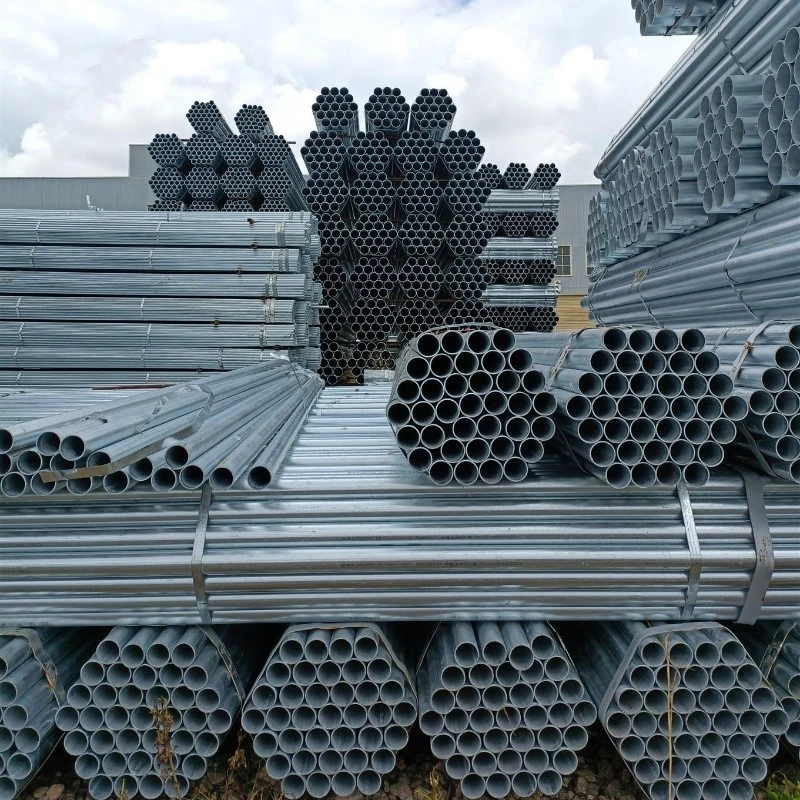
· Protective Coatings: Galvanizing (zinc coating) protects against rust for outdoor use. Special epoxy, plastic, or concrete coatings are applied for pipelines to prevent corrosion.
From the deepest oil wells to the tallest skyscrapers, from the water in our taps to the cars we drive, steel pipes perform a silent yet indispensable role. Their applications are a testament to human ingenuity in material science and engineering. As global challenges evolve-be it the transition to renewable energy, the development of smarter cities, or the creation of more resilient infrastructure-steel pipes, in their continually advancing forms and grades, will undoubtedly remain a critical enabler, shaping the physical backbone of our future world. They are not just products of industry; they are the very channels through which modern life flows.