


Which Is Thicker, 24 Gauge or 26 Gauge Metal Roofing?
If you have ever stood in a supply yard, staring at two stacks of steel panels, you have likely encountered a quiet but critical confusion. The labels read "24 gauge" and "26 gauge," and conventional wisdom whispers that a higher number means more material. In almost every other industry, that logic holds. But with sheet metal for roofing, the numbers invert. The lower the gauge, the thicker the steel. This means 24 gauge is thicker than 26 gauge. Understanding why this is true, and what the practical difference means for a building, separates a roof that merely exists from one that endures.
The gauge system for metal roofing is a remnant of a time when metal thickness was measured by the number of passes through a rolling mill. More passes produced thinner material. Today, the system is standardized, but the inverse logic remains. When comparing 24 gauge to 26 gauge, the difference is not merely a matter of decimal points. It is a difference in structural resilience, installation demands, long-term maintenance, and the fundamental question of what a building actually requires from its roof.
To begin with the numbers: 24 gauge steel measures approximately 0.0239 inches in thickness for galvanized steel, while 26 gauge measures roughly 0.0187 inches. That difference-about 0.0052 inches-seems negligible on paper. In practice, it represents roughly a 28 percent increase in material mass for the 24 gauge. This extra mass translates directly into rigidity. A panel of 24 gauge galvanized roofing sheet will resist foot traffic, hail impact, and wind uplift with noticeably more integrity than its 26 gauge counterpart. When a roofer walks across a 26 gauge panel, there is a distinct flex, a subtle oil-canning underfoot. With 24 gauge, the surface feels more like a solid deck.
This tactile difference matters because metal roofs are not passive layers. They are structural diaphragms. In high-wind regions, the thickness of the steel dictates how well the panels hold their fasteners. A thinner panel, such as 26 gauge, has less thread engagement for screws and a higher tendency to tear around fastener points under cyclical loading. Over years of thermal expansion and contraction, the metal moves. The thicker 24 gauge resists the fatigue that slowly elongates screw holes in thinner materials. For this reason, many building codes and insurance carriers specify minimum thicknesses for roof systems, particularly in coastal or tornado-prone areas.
Yet the choice between the two is not simply a matter of "thicker is always better." There is a hierarchy of application. A 26 gauge galvanized roofing sheet is not an inferior product; it is a product designed for specific contexts. It is lighter, easier to cut, and more forgiving during installation on complex geometries. For residential outbuildings, sheds, or covered patios where span lengths are short and live loads are minimal, 26 gauge performs adequately. Its lower weight reduces the structural load on the supporting framework, which can be an advantage when retrofitting a roof onto an existing structure with unknown load capacity.
But where the distinction becomes most critical is in the realm of longevity. The service life of a metal roof is not determined solely by the coating. While the zinc layer on a galvanized roofing sheet provides sacrificial corrosion protection, the underlying steel substrate must survive the decades. Thinner steel has less margin for error. If the galvanized coating is compromised-by a scratch during installation, by standing water at a lap joint, or by acid rain over decades-corrosion begins. A 26 gauge panel has less steel to lose before perforation occurs. A 24 gauge panel offers a thicker sacrificial substrate, effectively buying years or even decades of additional service life before a breach forms.
Cost is often the deciding factor in the gauge debate. A 26 gauge galvanized roofing sheet typically costs less per square foot, and the difference is not trivial on a large project. The material itself is cheaper, and because it is lighter, shipping costs are lower, and installation is faster. For a budget-conscious project with a short to medium expected lifespan, the economic logic of 26 gauge is compelling. However, that initial savings must be weighed against the probability of earlier replacement. A 24 gauge roof installed today may outlast two successive 26 gauge roofs over the same period, making the thicker material the more economical choice on a lifecycle cost basis.
Installation technique also diverges between the two gauges. Thinner steel demands more purlins. The allowable span-the distance a panel can bridge between supports without excessive deflection-is less for 26 gauge than for 24 gauge. Using a 26 gauge galvanized roofing sheet on purlins spaced for 24 gauge will result in a roof that feels spongy underfoot and may experience premature fastener loosening and oil-canning. Conversely, a 24 gauge panel can span wider purlin spacings, potentially reducing substructure costs. This interplay between material thickness and structural framing is often overlooked by specifiers who focus solely on the roof covering itself.
Oil-canning, the bivwavy distortion visible in flat areas of metal panels, is more pronounced in thinner materials. While oil-canning is primarily an aesthetic issue-it does not compromise structural integrity-it is a frequent source of owner dissatisfaction. A 26 gauge panel has less inherent stiffness to resist the minor stresses induced by thermal movement and installation handling. A 24 gauge panel, with its greater section modulus, presents a flatter, more uniform appearance over time. For architects and homeowners who prioritize clean lines, the thicker gauge provides a visual advantage that is difficult to quantify in specifications but immediately apparent after installation.
The type of coating applied to the galvanized roofing sheet also interacts with the gauge selection. Galvanized steel-steel coated with a layer of zinc-forms the base for most painted metal roofing. The zinc provides cathodic protection, meaning it corrodes preferentially to protect the underlying steel. However, the thickness of the zinc coating is typically independent of the steel gauge. A G90 galvanized coating, for instance, offers a certain weight of zinc per square foot regardless of whether the base steel is 24 or 26 gauge. The difference is that on a thinner substrate, the same coating must perform with less backup material. If the zinc eventually depletes in a localized area, the thinner steel will fail sooner.
In terms of fastener selection, thicker steel allows for deeper screw threads and greater pullout strength. Standing seam roofs, which use concealed fasteners and clips, benefit from the added stiffness of 24 gauge. The clips that attach the panels to the structure must resist uplift forces transmitted through the panel seams. A 26 gauge panel, being more flexible, transfers more load to the clip and fastener system, increasing the risk of clip fatigue. Many manufacturers of standing seam systems specify a minimum 24 gauge for their structural panels, particularly for roofs with low slopes where water shedding is less forgiving.
For agricultural and industrial buildings, where the roof is often exposed to chemical fumes, airborne particulates, and mechanical abrasion, the thicker gauge is nearly always specified. A 24 gauge galvanized roofing sheet in a dairy barn, for example, will better resist the corrosive effects of ammonia from livestock waste. The same applies to factories with process emissions. The combination of a heavy galvanized coating on a 24 gauge substrate provides a margin of safety that thinner materials cannot match. In these environments, roof replacement means interrupting operations, so durability is prioritized over first cost.
The acoustic performance of a metal roof is another consideration rarely mentioned in gauge comparisons. Rain striking a 26 gauge roof produces a sharper, louder sound because the panel vibrates more readily. A 24 gauge panel, with its higher mass per unit area, dampens sound transmission noticeably. While neither gauge will match the acoustic deadening of asphalt shingles with a plywood deck, the difference between the two is perceptible. For buildings where rain noise is a concern-such as homes, schools, or churches-the thicker gauge provides a measurable improvement in occupant comfort.
Transportation and handling logistics also differ. A bundle of 26 gauge panels is lighter and can often be handled by fewer workers. On projects with limited site access or where rooftop hoisting is done manually, the weight savings of 26 gauge are a practical advantage. However, the lighter material is also more susceptible to handling damage. A 26 gauge galvanized roofing sheet that is dropped or slid across a rough surface is more likely to suffer permanent bends, creases, or coating scratches than its 24 gauge counterpart. The cost of replacing damaged panels can quickly erase any material savings.
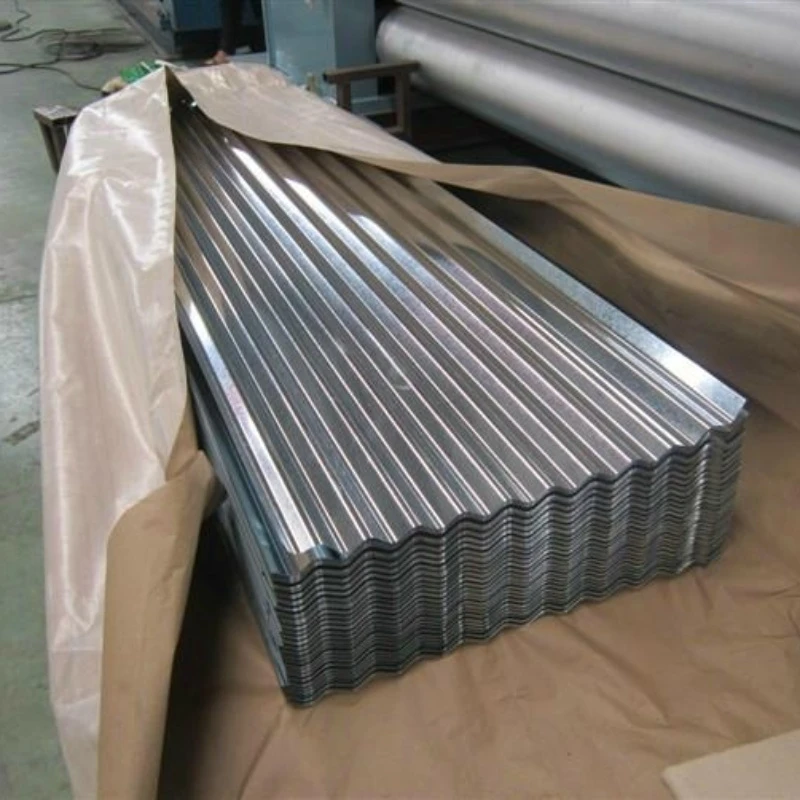
The choice between gauges also influences the acceptable roof slope. Low-slope metal roofs-those with pitches below 3:12-rely on standing seams to prevent water infiltration. The stiffness of the panels affects the integrity of the seam locks. A 24 gauge panel forms a tighter, more durable seam because the metal holds its shape under the pressure of seaming tools. A 26 gauge panel can be seamed successfully, but it is more prone to distortion if the seaming process is not precisely controlled. For roofs with slopes approaching flat, the margin for error is small, and the thicker gauge provides insurance against installation variability.
When evaluating the long-term costs, it is helpful to consider the roof not as a single expense but as a sequence of investments. The initial cost difference between 24 and 26 gauge is often 15 to 25 percent in favor of the thinner material. However, the service life of a 26 gauge roof in a given environment might be 20 to 25 years, while a 24 gauge roof might deliver 30 to 40 years. Furthermore, the 24 gauge roof is more likely to be re-roofed over rather than completely torn off at the end of its first life, because the thicker substrate provides a better base for a second roof system. This cascading effect means that the thicker gauge often proves cheaper over a 50-year building horizon.
For the homeowner or building owner who will occupy the structure for decades, the decision tends toward 24 gauge. For the developer or investor building to a near-term holding period, 26 gauge offers an acceptable balance of cost and performance. Neither choice is inherently wrong, but they reflect different assumptions about time, risk, and the value of future maintenance.
In the world of metal roofing, the gauge number is often treated as a proxy for quality, but it is more accurately understood as a tool for matching the material to the application. A 24 gauge galvanized roofing sheet is not a superior version of a 26 gauge sheet; it is a different category of product intended for different structural demands. Using 24 gauge where 26 gauge would suffice is a waste of material and budget. Using 26 gauge where 24 gauge is required is an invitation to premature failure.
The practical takeaway is this: measure the spans, consider the wind loads, assess the building's intended life, and then choose the gauge that aligns with those constraints. If the roof will be walked on regularly, if it spans long distances between supports, if it is in a region with severe weather, or if the building is meant to last generations, 24 gauge is the appropriate choice. If the roof covers a simple structure with close purlin spacing, if weight is a critical constraint, or if the budget is strictly limited, 26 gauge can serve well.
What makes the gauge question enduring is that it forces a rare moment of honesty in construction. It asks the builder or owner to decide how much they truly value longevity. The difference between the two thicknesses is invisible from the ground. No one looks at a finished roof and declares, "Ah, 24 gauge." The difference reveals itself only over time-in how the roof handles the first hailstorm, in whether the fasteners remain tight after a decade, in how many years pass before the first rust stain appears.
Ultimately, understanding that 24 gauge is thicker than 26 gauge is only the beginning. The deeper understanding lies in recognizing that a galvanized roofing sheet is not merely a covering but a structural component, and its thickness is a statement about the relationship between the building and time. Choose wisely, not because one gauge is universally better, but because the roof is the one part of a structure that must weather everything the sky sends down, year after year, without complaint.


