

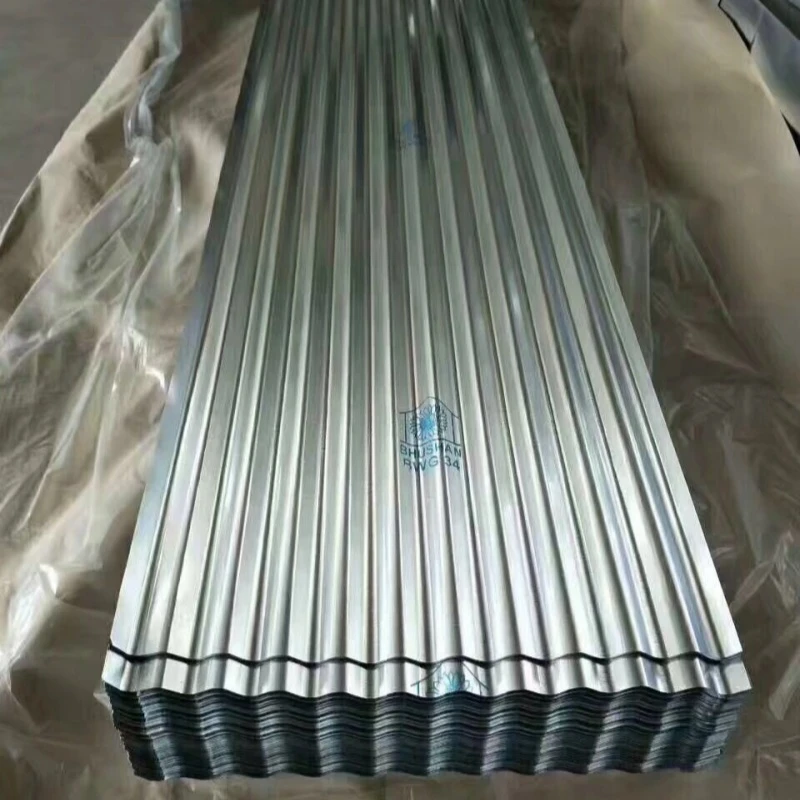
What is the best thickness for a metal roof?
If you are an importer, wholesaler, or contractor dealing in construction materials, you have likely been asked this question countless times: "What is the best thickness for Galvanized Roofing Sheet?
Based on years of practical experience handling container exports, the most direct and honest answer is: there is no single "best" thickness.
For instance, specifications suitable for a client's warehouse in Dubai would be completely inadequate for an agricultural shed in Colombia. Procuring the wrong thickness could lead to customer complaints, rusting, or even roof panel deformation under harsh local weather conditions.
You must understand your target market and determine which specifications can truly withstand the realities of the local environment.
1. Fundamentals: The Difference Between Thickness and Gauge
Before delving into regional specifics, let us clarify a common point of confusion in trade procurement. Manufacturers typically express thickness in millimeters (mm) or gauge standards (such as BWG, GA, or AZ).
In international trade, it is crucial to specify the exact thickness in millimeters (mm) rather than relying solely on a gauge designation, as definitions of gauge standards vary across countries. Additionally, always verify the coating thickness (e.g., AZ Al-Zn coating or galvanization). Even if the steel sheet is thick, poor protective coating will still lead to rusting within just a few years.
2. Regional Segmentation: What Does Your Market Really Need?
Africa: Balancing Price Sensitivity with a Tropical Climate
Typical Climate: Seasonal torrential rains, high humidity, intense UV sunlight, and occasional severe storms.
Market Reality: Price is often the primary factor driving end-user decisions. However, importing ultra-thin sheets (under 0.20mm) leads to significant after-sales issues. These thin sheets are highly prone to denting during transport, tearing at screw holes during severe storms, and rusting rapidly.
Recommended Thickness Range for Galvanized Roofing Sheet:
Economy Residential: 0.11mm – 0.30mm (The absolute minimum for survival in cost-driven markets).
Standard/Premium Residential & Commercial: 0.11mm – 0.45mm (The "sweet spot": strong enough to support a person's weight during installation, highly hail-resistant, and durable for decades).
However, many of our African clients opt for 0.11mm galvanized corrugated sheets; because the material is thinner, they can produce a higher volume of sheets, thereby increasing sales margins. This product has gained significant popularity among African customers, particularly in Nigeria.
South America: Durability, Corrugated Profiles, and High Coastal Humidity
Typical Climate: High coastal humidity and frequent rainfall, alongside diverse mountainous or tropical climate zones (e.g., Brazil, Peru, Chile, Colombia).
Market Realities: South American buyers generally prioritize long-term durability over simply seeking the lowest price. Trapezoidal and corrugated profiles are the most common. Given the high humidity or salt-laden sea air in many markets, corrosion resistance is just as important as steel sheet thickness.
Recommended Thickness Range for Galvanized Roofing Sheet:
Residential Roofing: 0.2mm – 0.45mm (provides structural rigidity, withstands foot traffic during maintenance, and prevents sagging between purlins).
Industrial and Commercial Warehouses: 0.50mm – 0.60mm (crucial for buildings with wider spans between roof trusses and higher wind loads).
Professional Advice: For coastal locations, we recommend using AZ100 to AZ150 (Alu-Zinc/Galvalume) coatings.
Our clients in Colombia frequently purchase sheets with thicknesses around 0.2mm–0.3mm, widths of 800mm, and lengths ranging from 2.14m to 3.05m. Hardness requirements are typically around 500G. Therefore, purchasing decisions should be based on the specific thicknesses commonly used by customers in the local market.

Middle East: Extreme Heat, Sandstorms, and Thermal Expansion/Contraction
Typical Climate: Scorching desert heat, extreme diurnal temperature fluctuations, sandstorms, and low rainfall.
Market Reality: In places like the UAE, Saudi Arabia, Oman, or Iraq, metal roofing is subjected to severe thermal expansion and contraction. Thin metal sheets expand rapidly under intense solar exposure and contract when temperatures drop at night. Panels that are too thin (under 0.40mm) are prone to warping, generating loud "oil-canning" noises, and eventually causing fasteners to loosen.
Recommended Thickness Range for Galvanized Roofing Sheet:
Standard Commercial/Industrial: 0.45mm – 0.50mm
Long-span Industrial Buildings & Warehouses: 0.55mm – 0.70mm
Professional Advice: In the Middle East, using thicker steel sheets combined with a light-colored, highly durable PVDF (fluorocarbon) finish helps reflect solar heat and prevent thermal deformation.
Our clients in Dubai frequently purchase galvanized corrugated sheets with specifications of 0.18mm x 900/800mm x 3000mm; however, please make your purchasing decisions based on your specific requirements and the specifications commonly sold in the local steel market, as usage standards for galvanized corrugated sheets can vary between cities within the same country.
3. Pitfalls to Avoid When Purchasing
Many customers are highly price-sensitive regarding galvanized corrugated sheets and often attempt to negotiate the price down by $50 to $100 below the genuine market quote. However, prices that fall below market rates often conceal various purchasing pitfalls.
1. The "Negative Tolerance" Trap: Always clarify the supplier's thickness tolerance. If you order 0.40mm sheets but the factory applies a -0.05mm tolerance, the steel you actually receive may be only 0.35mm thick. Be sure to specify whether you are purchasing "full thickness" material or material subject to standard commercial tolerances.
2. Overlooking Coating Specifications: Many customers specify zinc coating weights of 80g, 100g, or even 200g in their requirements but set a target purchase price based on standard (lower) coating levels. They may claim that other suppliers are offering much lower prices; in reality, some factories quote prices for minimal coating levels while substituting them for the higher specifications requested.
3. Neglecting Shipping and Handling: Without proper dunnage (such as wooden supports) and waterproof packaging, thinner materials (under 0.30mm) are highly susceptible to bending and deformation inside shipping containers. Ensure your supplier knows how to safely load and ship export containers.
Summary:
Ultimately, selecting the right metal roofing panel thickness is about aligning physical environmental conditions with customer expectations; do not simply chase the lowest price on the market.
If you are stocking a range of reliable, best-selling products for the local market, the 0.11mm to 0.45mm range is generally the safest and most profitable for international trade.
Are you currently sourcing galvanized Roofing Sheet for your market? Please feel free to share details about your country or specific application requirements, and let's discuss which specifications will give you the best competitive edge.
Pls contact us at free time when you need any steel product . Email:info@tjkaida.com / Whatsapp Number:+0086 15222734007


