

What is the magnetic property of GL Steel Coil?
As a supplier of GL Steel Coil, I often encounter inquiries about its various properties, and one question that comes up quite frequently is about its magnetic property. In this blog post, I'll delve into the magnetic characteristics of GL Steel Coil, exploring what makes it magnetic and how this property impacts its applications.
Understanding GL Steel Coil
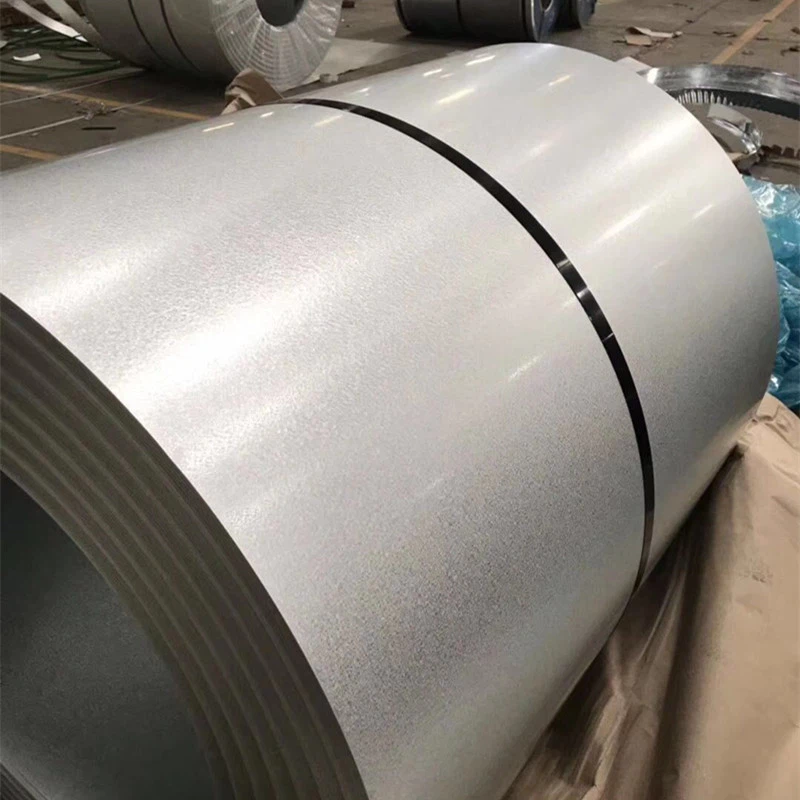
Before we discuss its magnetic property, let's briefly understand what GL Steel Coil is. GL stands for Galvalume, which is a type of aluminum - zinc alloy coating applied to steel. This coating provides excellent corrosion resistance, making GL Steel Coil a popular choice in many industries. You can learn more about ASTM A792 Galvalume here and Aluzinc Steel Coil here. To find detailed information about GL Steel Coil itself, visit this link.
The Basis of Magnetism in GL Steel Coil
The magnetic property of GL Steel Coil primarily stems from the steel substrate. Steel is an alloy mainly composed of iron, and iron is a ferromagnetic material. Ferromagnetic materials have a strong response to magnetic fields. They can be magnetized when placed in an external magnetic field and retain some of that magnetization even after the external field is removed.
The aluminum - zinc alloy coating on GL Steel Coil is non - magnetic. However, it does not significantly affect the overall magnetic behavior of the coil because the coating is relatively thin compared to the steel substrate. The thickness of the coating typically ranges from a few micrometers to tens of micrometers, while the steel substrate can be several millimeters thick. So, the magnetic characteristics of the steel core dominate the magnetic properties of the entire GL Steel Coil.
Factors Affecting the Magnetic Property
Although the steel substrate is the main determinant of the magnetic property, several factors can influence the strength and behavior of the magnetism in GL Steel Coil:
- Steel Composition: The amount of iron and other alloying elements in the steel can affect its magnetic properties. For example, adding elements like nickel, cobalt, or silicon can modify the magnetic domain structure of the steel, which in turn can change its magnetic permeability and coercivity. Magnetic permeability is a measure of how easily a material can be magnetized, while coercivity is the amount of magnetic field required to demagnetize the material.
- Heat Treatment: Heat treatment processes such as annealing, quenching, and tempering can alter the microstructure of the steel. Annealing, for instance, can relieve internal stresses in the steel and promote the growth of larger grains. Larger grains generally have lower magnetic anisotropy, which can increase the magnetic permeability of the steel. On the other hand, quenching can produce a harder and more brittle microstructure, which may have different magnetic properties compared to annealed steel.
- Mechanical Deformation: Cold rolling or other forms of mechanical deformation can introduce dislocations and change the grain orientation in the steel. This can affect the movement of magnetic domains within the material, thereby influencing its magnetic behavior. For example, cold - rolled steel may have different magnetic properties along different directions due to the preferred grain orientation induced by the rolling process.
Applications of the Magnetic Property of GL Steel Coil
The magnetic property of GL Steel Coil makes it suitable for a wide range of applications:
- Electrical Appliances: In the manufacturing of electrical appliances such as motors, transformers, and generators, the magnetic property of GL Steel Coil is crucial. The steel core in these devices is used to create and guide magnetic fields, which are essential for the conversion of electrical energy to mechanical energy or vice versa. The high magnetic permeability of the steel allows for efficient magnetic flux transfer, improving the performance and efficiency of these electrical devices.
- Magnetic Storage Systems: GL Steel Coil can be used in magnetic storage systems such as hard disk drives. The magnetic material in the hard disk platter needs to be able to store and retrieve data based on the orientation of its magnetic domains. The stable magnetic properties of GL Steel Coil make it a potential candidate for such applications, although other materials may also be used depending on specific requirements.
- Magnetic Separation: In industries where the separation of magnetic and non - magnetic materials is required, GL Steel Coil can be used in magnetic separators. The magnetic force exerted by the coil can attract and separate ferromagnetic particles from a mixture, which is useful in recycling, mining, and other industries.
Measuring the Magnetic Property of GL Steel Coil
There are several methods to measure the magnetic properties of GL Steel Coil:
- Magnetic Susceptibility Measurement: Magnetic susceptibility is a measure of how much a material is magnetized in the presence of an external magnetic field. This can be measured using a magnetic susceptibility meter. The sample of GL Steel Coil is placed in a known magnetic field, and the induced magnetization is measured. The ratio of the induced magnetization to the applied magnetic field gives the magnetic susceptibility.
- Magnetization Curve Measurement: A magnetization curve shows the relationship between the magnetic field strength (H) and the magnetization (M) of the material. This curve can be obtained using a magnetometer. By applying a varying magnetic field to the GL Steel Coil and measuring the corresponding magnetization, the magnetization curve can be plotted. From this curve, important magnetic parameters such as saturation magnetization, remanence, and coercivity can be determined.
Importance of Magnetic Property in Quality Control
The magnetic property of GL Steel Coil is an important aspect of quality control. Consistent magnetic properties indicate a uniform composition and microstructure of the steel substrate. Deviations in magnetic properties can be an indication of problems such as improper heat treatment, inconsistent alloy composition, or internal defects in the steel. For example, if the coercivity of a batch of GL Steel Coil is significantly different from the expected value, it may suggest that there are issues with the heat treatment process during manufacturing.
Conclusion
In conclusion, the magnetic property of GL Steel Coil is mainly due to the ferromagnetic nature of its steel substrate. The non - magnetic aluminum - zinc alloy coating has a negligible effect on the overall magnetism of the coil. Various factors such as steel composition, heat treatment, and mechanical deformation can influence the magnetic properties. These magnetic properties make GL Steel Coil suitable for a variety of applications in electrical, storage, and separation industries. Measuring the magnetic properties is an important part of quality control to ensure the consistency and quality of the product.

If you are interested in purchasing GL Steel Coil for your specific applications, or if you have any further questions about its magnetic properties or other characteristics, please feel free to contact us for procurement discussions. We are committed to providing high - quality GL Steel Coil products and professional technical support.
References
- Cullity, B. D., & Graham, C. D. (2008). Introduction to Magnetic Materials. Wiley - Interscience.
- Bhadeshia, H. K. D. H., & Honeycombe, R. W. K. (2017). Steels: Microstructure and Properties. Elsevier.