

Alright, folks! As a supplier of cold rolled sheet, I often get asked, "What is the camber tolerance for cold rolled sheet?" Today, I'm gonna break it down for you in a way that's easy to understand.
First off, let's quickly cover what cold rolled sheet is. Cold rolled sheets are made by further processing hot - rolled steel sheets. The cold rolling process gives the sheets a smoother surface finish, better dimensional accuracy, and higher strength compared to their hot - rolled counterparts. We offer a variety of cold rolled sheets, like Black Annealed Cold Rolled Steel Sheet, Cold Rolled Carbon Steel Sheet, and Cold Rolled Steel Sheet.
Now, onto the main topic: camber tolerance. Camber is the deviation of a sheet from being perfectly straight along its length. In simpler terms, if you lay a cold rolled sheet on a flat surface, and it curves sideways instead of lying flat, that's camber. And the camber tolerance is the acceptable amount of this sideways curve.
The camber tolerance for cold rolled sheet can vary depending on several factors. One of the most important factors is the standard to which the sheet is being produced. Different national and international standards have their own defined camber tolerances. For example, ASTM (American Society for Testing and Materials) standards set out specific ranges for camber tolerance based on the width and thickness of the cold rolled sheet.
Generally speaking, for thinner cold rolled sheets, the camber tolerance is usually more strict. This is because thinner sheets are more likely to be used in applications where precise flatness is crucial, like in electronics or automotive components. On the other hand, thicker sheets can tolerate a bit more camber as they are often used in less precision - critical applications, such as structural components.
Let me give you an example to illustrate. If you have a cold rolled sheet that's around 0.5 - 1.0 mm thick and has a width of up to 1250 mm, the camber tolerance might be around 3 - 5 mm per meter of length. As the thickness increases, say to around 2 - 3 mm, the camber tolerance could go up to 5 - 8 mm per meter. But remember, these are just rough estimates, and the actual tolerance can be different based on the specific requirements and standards.
Another factor that influences camber tolerance is the manufacturing process. Even with the best - controlled cold rolling processes, there can be some minor variations that lead to camber. Our manufacturing team is constantly working to minimize these variations. We use state - of - the - art equipment and quality control measures to ensure that our cold rolled sheets meet the required camber tolerances.
During the production process, we monitor the camber at multiple stages. We have in - line measurement systems that can detect any deviations in real - time. If the camber exceeds the tolerance limits, we take corrective actions. Sometimes, we might adjust the rolling parameters, like the pressure and speed of the rollers. In other cases, we might use special flattening equipment to correct the camber.
It's also important to note that the end - use application of the cold rolled sheet plays a huge role in determining the acceptable camber tolerance. For instance, if the sheet is going to be used in a precision stamping operation, even a small amount of camber can cause problems. The stamped parts might not fit properly, leading to assembly issues and potential product failures. In contrast, if the sheet is being used for general construction purposes, a slightly higher camber tolerance might be acceptable.
As a supplier, we understand the importance of meeting our customers' specific camber tolerance requirements. That's why we offer customized solutions. If you have a particular project with strict camber tolerance needs, we can work with you to produce cold rolled sheets that meet those exact specifications.
We also provide detailed quality control reports with each batch of cold rolled sheets we supply. These reports include information about the camber measurements, along with other important quality parameters. This way, you can have full confidence in the quality of the sheets you're purchasing.
In addition to camber tolerance, we also pay close attention to other quality aspects of our cold rolled sheets. Surface finish is another crucial factor. Our sheets have a smooth and uniform surface, which is free from defects like scratches, pits, or rust. We use advanced cleaning and coating processes to ensure the best possible surface quality.
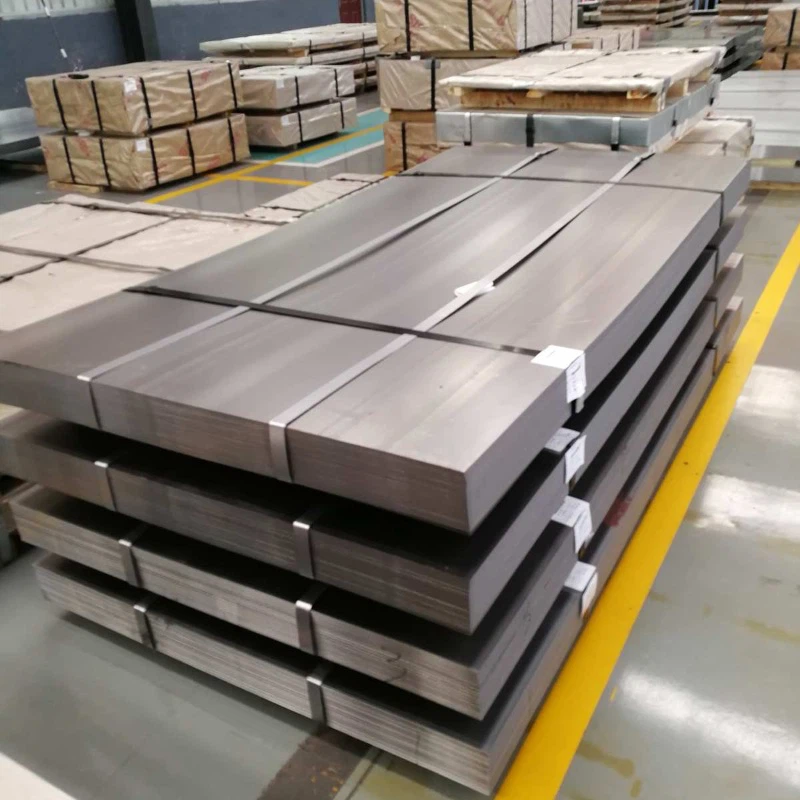

The mechanical properties of our cold rolled sheets are also carefully controlled. We make sure that the sheets have the right combination of strength, ductility, and hardness. This ensures that they can perform well in a wide range of applications.
If you're in the market for cold rolled sheets, whether it's for a small - scale project or a large - scale industrial application, we're here to help. We have a wide range of products available, and we can provide you with the right cold rolled sheet that meets your camber tolerance and other quality requirements.
Don't hesitate to reach out to us if you have any questions or if you want to discuss your specific needs. We're always happy to have a chat and find the best solution for you. Whether you need Black Annealed Cold Rolled Steel Sheet, Cold Rolled Carbon Steel Sheet, or Cold Rolled Steel Sheet, we've got you covered.
So, if you're looking for high - quality cold rolled sheets with the right camber tolerance, get in touch with us. We're ready to start a great business relationship with you!
References
- ASTM Standards for Steel Products
- Industry Best Practices for Cold Rolled Sheet Manufacturing