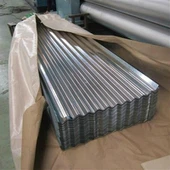
Tianjin Kaida Import&Export Co.,Ltd is one of the leading manufacturers and suppliers of galvanised sheets for shed in China, featured by quality products and low price. Please rest assured to buy cheap galvanised sheets for shed from our factory. Contact us for discount information.
|
Product name: |
Galvanised Sheets For Shed |
|
Thickness: |
0.12~0.8mm, or customized |
|
Width: |
665~1150mm, or customized |
|
Length: |
1000~11800mm or customized |
|
Grade: |
SGCC/DX51D+Z, DX52D+Z,DX53D+Z, etc. |
|
Zinc Coating: |
30-275g/m2, or customized |
|
Spangle: |
Regular spangle, Minimized spangle, Zero spangle, Big spangle |
|
Treatment: |
Slightly Oiled, Dry |
|
Hardness: |
Soft, Full Hard, Half Hard |
|
Packing: |
Standard export package |
|
Standard: |
EN, JIS, GB |
|
Application: |
Building industry, Structural use, Roofing, Commercial use, Household appliance, Industry facilities, Office buildings... |
Why Your Shed Roof Deserves the Right Galvanised Sheets for Shed – and How to Tell Hot-Dip from Cold-Dip
if you're buying galvanised sheets for shed roofing, you're not just picking shiny metal. You're picking how long that roof lasts before rust eats through it. And the single biggest mistake I see trade buyers make? Grabbing whatever says "galvanised" without asking how it was galvanised. So here's the deal: galvanised sheets for shed come in two very different flavours – hot-dip and cold-dip (also called electro-galvanised). They look almost identical in a catalogue photo. They cost different. They perform worlds apart. And if you're shipping containers overseas to farmers, builders, or greenhouse operators, getting this wrong means angry emails, returned containers, and a damaged reputation. So let's break it down like humans, not metallurgists – because your next order of galvanised sheets for shed depends on it.
First, what does "galvanised" even mean? It's a zinc coating that protects steel from moisture and oxygen. But how that zinc gets onto the steel is everything. Hot-dip galvanising – the good stuff – means the steel sheet is dunked into a bath of molten zinc at around 450°C. The zinc bonds metallurgically with the steel. You get a thick, rough, spangled (that's the shiny crystal pattern) coating, typically 45–85 microns thick. Cold-dip (electro-galvanising) is a room-temperature process where zinc is electrically plated onto the steel. It's thinner – usually 10–20 microns – smooth, uniform, and looks prettier in a showroom. But prettier doesn't mean tougher. When you're ordering galvanised sheets for shed for an agricultural roof that faces rain, sun, bird droppings, and occasional hail, that thickness difference is the difference between a 15-year roof and a 3-year rust bucket.
Now, here's the practical test any trade buyer can do without lab equipment. Take a sample of your galvanised sheets for shed and scratch the surface with a knife – not deep, just a light score. Hot-dip will show a dull, greyish-zinc layer that's clearly thicker; cold-dip will reveal bright, shiny steel almost immediately because the coating is paper-thin. Another clue: weight. Hot-dip galvanised sheets for shed feel noticeably heavier per square metre – about 5–8 kg more for a typical 0.5mm sheet. Ask your supplier for the coating weight in g/m². ISO standard says hot-dip should be at least 275 g/m² (both sides); cold-dip often runs 100–150 g/m². If they can't tell you that number, walk away. And please, for the love of your profit margin, don't believe "equivalent" or "similar" – those are code words for cold-dip pretending to be hot-dip.
Why does this matter for a shed roof specifically? A shed – whether it's a farm implement store, a chicken coop, a hay barn, or a greenhouse – has a roof that takes the full brunt of weather. Hot-dip galvanised sheets for shed can handle condensation from the inside (yes, that happens) and acid rain from the outside. Cold-dip galvanised sheets for shed will start showing red rust at cut edges, screw holes, and lap joints within months, because the thin zinc gets consumed faster than a free buffet. I've seen container loads of cold-dip sheets arrive at a port in Kenya, installed on 50 greenhouses, and by the second rainy season, the buyers were patching leaks with tape. That's not a saving – that's a disaster.
So when you're quoting for a client, here's my blunt advice. Specify hot-dip galvanised sheets for shed with a clear coating weight (Z275 or higher) and a mill certificate. Expect to pay 15–25% more than cold-dip – but that premium buys you 5–8 times the lifespan. For a typical 200m² shed roof, the extra cost is maybe $200–300, while replacing a failed cold-dip roof after three years costs labour, downtime, and new materials – easily $2,000. Your customer will remember who sold them the roof that outlasted their tractor. They won't remember who saved them a few bucks upfront.
How to spot the difference when you're negotiating? Ask the supplier: "Is this hot-dip or electro-galvanised?" If they hesitate, or say "both are fine," they're pushing cold-dip. Request a photo of the edge – hot-dip has a slightly thicker, uneven edge with tiny zinc drips; cold-dip has razor-sharp, clean edges. Order a small sample box (say 5 sheets) and do the scratch test yourself before committing to a 20-foot container. And always, always put the specification in your purchase order: "Hot-dip galvanised, minimum 275g/m², for roofing." That legal text saves you from "we sent what you asked" disputes.
For trade buyers, I also recommend checking the corrugation profile. Hot-dip galvanised sheets for shed are often available in deeper profiles (like 35mm or 45mm) because the thicker zinc doesn't crack during roll-forming. Cold-dip galvanised sheets for shed can crack at tight bends – that's another failure point. And if your shed is in a coastal area with salt spray, hot-dip is non-negotiable; cold-dip will corrode in under two years. I've supplied galvanised sheets for shed to projects in Australia, Nigeria, and Chile – the ones that survived cyclones were always hot-dip. The ones that didn't? You guessed it.
Let's talk about fastener compatibility too – because even the best galvanised sheets for shed fail if you use the wrong screws. Hot-dip needs self-drilling screws with EPDM washers and a matching zinc coating (or stainless steel). Cold-dip is thinner, so screws can over-torque and strip – another headache. But that's a topic for another day. Today, your takeaway is simple: when you see "galvanised sheets for shed" on a quote, your first question is "hot or cold?" Your second question is "prove it with numbers." Your third question is "can I visit your factory or get third-party test reports?" If the supplier can't answer all three, find another one.
Finally, think about your customer's end-user – the farmer or greenhouse owner who walks into that shed every morning. They don't care about metallurgy. They care that their tools aren't rusty, their hay stays dry, and their chickens don't get rained on. When you choose hot-dip galvanised sheets for shed, you're giving them peace of mind. When you cheap out with cold-dip galvanised sheets for shed, you're giving them a ticking clock. I've been in this trade for over a decade, and I promise you – the extra five minutes you spend verifying the coating type will save you fifty hours of after-sales complaints. So do yourself and your client a favour. Specify hot-dip. Test samples. Get it in writing. And never assume "galvanised" means "good." Because in the world of galvanised sheets for shed, good is hot, and cold is a costly mistake. Now go make that order count – your reputation rides on that roof.

Quality Inspection

Packaging & Container Loading

Hot Tags: galvanised sheets for shed, China galvanised sheets for shed manufacturers, factory, 6 Ft Corrugated Galvanized Steel Utility Gauge Roof Panel, Corrugated Gi, Galvanized Corrugated Metal Roofing Sheet, Galvanized Roofing Panels Home Depot, House Roof Made Of GI Sheet, Zinc Coating Corrugated Sheet